


Nvidia is pouring $100B into AI infrastructure and OpenAI partnerships. Discover how this reshapes investing opportunities, cloud computing, and the future of artificial intelligence.
The Beginning of a New AI Supercycle
Every once in a while, a company makes a move so big it defines an entire era. Microsoft had Windows. Apple had the iPhone. Today, Nvidia is taking that position by committing over $100 billion to artificial intelligence. A huge slice of that spending is tied to the Nvidia OpenAI investment, a partnership that is sparking conversations across Wall Street and Silicon Valley.
So what does this $100B AI bet mean for investors? And will it really fuel the next industrial revolution, or just another bubble waiting to burst?
Why the Nvidia OpenAI Investment Matters
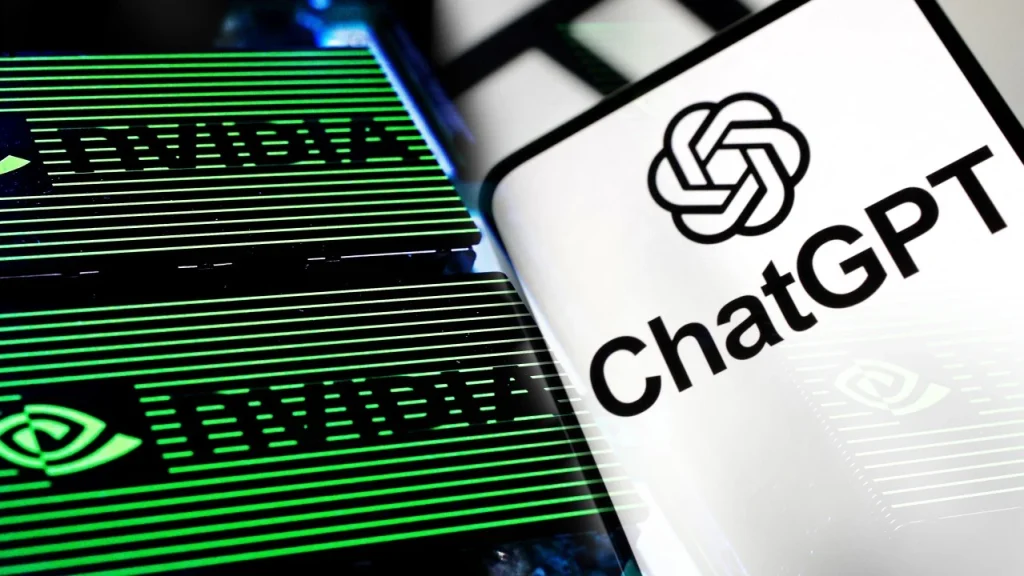
Nvidia’s GPUs already sit at the heart of generative AI models. From ChatGPT to image and video tools, the majority of computations are powered by Nvidia. The Nvidia OpenAI investment isn’t just about selling hardware. It’s about locking down the foundation of the AI economy.
Think of it as owning the roads and highways, not just the cars. By controlling the infrastructure, Nvidia ensures every AI company has to interact with it in some way. This is why many analysts are calling this the most significant AI infrastructure boom since the birth of the internet.
The Ripple Effect on Investors
For investors in the United States, UK, Canada, and Australia, this move has far-reaching implications.
- AI Stocks Beyond Nvidia: The Nvidia OpenAI partnership indirectly benefits cloud hosting, data centers, and cybersecurity firms. Companies like Snowflake and CrowdStrike are already seeing increased demand.
- ETF Growth: AI-focused exchange traded funds are witnessing a surge. With the Nvidia OpenAI investment dominating headlines, expect more retail investors piling in.
- Traditional Finance: Banks and fintech platforms are adopting AI models for fraud detection and credit scoring. Nvidia’s push validates these moves.
If you are wondering about the best AI stocks 2025, the answer isn’t just Nvidia. It’s the entire ecosystem that depends on its chips and data centers.
What This Means for OpenAI
The Nvidia OpenAI investment reshapes OpenAI’s trajectory. For years, OpenAI leaned heavily on Microsoft Azure infrastructure. Nvidia’s $100B AI bet changes the equation. With Nvidia’s resources, OpenAI gains the backbone to train models at scales competitors like Google DeepMind and Anthropic can’t easily match.
In simpler terms, this investment gives OpenAI an oxygen mask in an environment where compute costs can suffocate even the most innovative AI labs.
Risks That Investors Must Weigh
Not every gold rush creates winners. Even Nvidia’s $100B AI bet comes with real risks.
- Regulatory Pressure: Authorities in the US and EU are eyeing monopolistic behaviors. The Nvidia AI investment 2025 could come under antitrust fire.
- Geopolitical Tensions: With restrictions on chip exports to China, Nvidia’s supply chain could face turbulence.
- Overheating Hype: While AI has real use cases, the market could still face a correction, similar to what happened with crypto.
Investors interested in the Nvidia AI stock forecast must consider both the upside and the regulatory headwinds.
A Useful Analogy: The Oil Boom
To understand Nvidia’s role today, think of oil in the early twentieth century. Companies that refined, distributed, and controlled oil didn’t just grow—they defined economies. The Nvidia OpenAI investment positions Nvidia as the Standard Oil of AI, supplying the compute power that fuels everything else.
Where Businesses and Advertisers Fit
Beyond investors, this wave has major implications for businesses and advertisers.
- Ad Tech: Better AI models mean sharper ad targeting. The Nvidia cloud data centers backing these models guarantee efficiency at scale.
- Fintech Platforms: From robo-advisors to payment processors, AI is becoming standard. Nvidia’s infrastructure ensures these features can scale.
- Enterprise Tech: Firms in healthcare, logistics, and retail are already booking GPU capacity years in advance, treating it like airlines hedge fuel.
Frequently Asked Questions
Q1: Why is Nvidia investing $100B in AI now?
The Nvidia OpenAI investment is driven by skyrocketing demand for compute power. Training next-gen AI models requires massive infrastructure, and Nvidia sees this as a once-in-a-lifetime growth window.
Q2: How does this affect everyday investors?
It expands opportunities across AI stocks, ETFs, and infrastructure firms. Even if you don’t own Nvidia directly, the ripple effects touch the broader market.
Q3: Could this AI boom collapse like crypto did?
AI adoption is far more practical and widespread. While the hype is real, the use cases—from finance to healthcare—make this more sustainable than past bubbles.
Q4: What does this mean for OpenAI’s future?
The Nvidia OpenAI partnership ensures OpenAI has the compute power to train larger models and stay ahead of rivals.
Q5: Should I invest in Nvidia today?
The Nvidia AI stock forecast is bullish, but valuations are already high. If AI truly becomes the backbone of tech, Nvidia remains dominant, but timing matters.
Final Thoughts
The Nvidia OpenAI investment is more than a business deal. It’s a $100B declaration that artificial intelligence is not hype but destiny. For investors across high RPM markets like the US, UK, Canada, and Australia, this moment is both a chance and a test. The chance is clear—AI is here to stay. The test is recognizing when to ride the wave and when to step back.
History may remember this as the iPhone moment for artificial intelligence. Or it may become a lesson in overreach. Either way, Nvidia’s role is undeniable. of this era or just another case study in tech overreach. For now, the momentum is undeniable.


